Our Shrimp, Our Land, Our Water
సహకారం తో పరి రంనమ రోయ, నామ భూమి, నామ నీరు
The Krishna-Godavari Delta Place-Based Initiative, Andhra Pradesh, India
India’s smallholder shrimp farmers produce one of the world’s most traded seafood commodities. However, individual farm-level improvements aren’t enough to drive systemic change. The Krishna-Godavari Delta Place-Based Initiative (PBI) aims to deliver lasting environmental and social outcomes at the landscape level in key sourcing regions, grounded in the resilience of local farmers and communities.
OPPORTUNITY
Systemic Change in India’s Shrimp Sector Requires a Different Approach
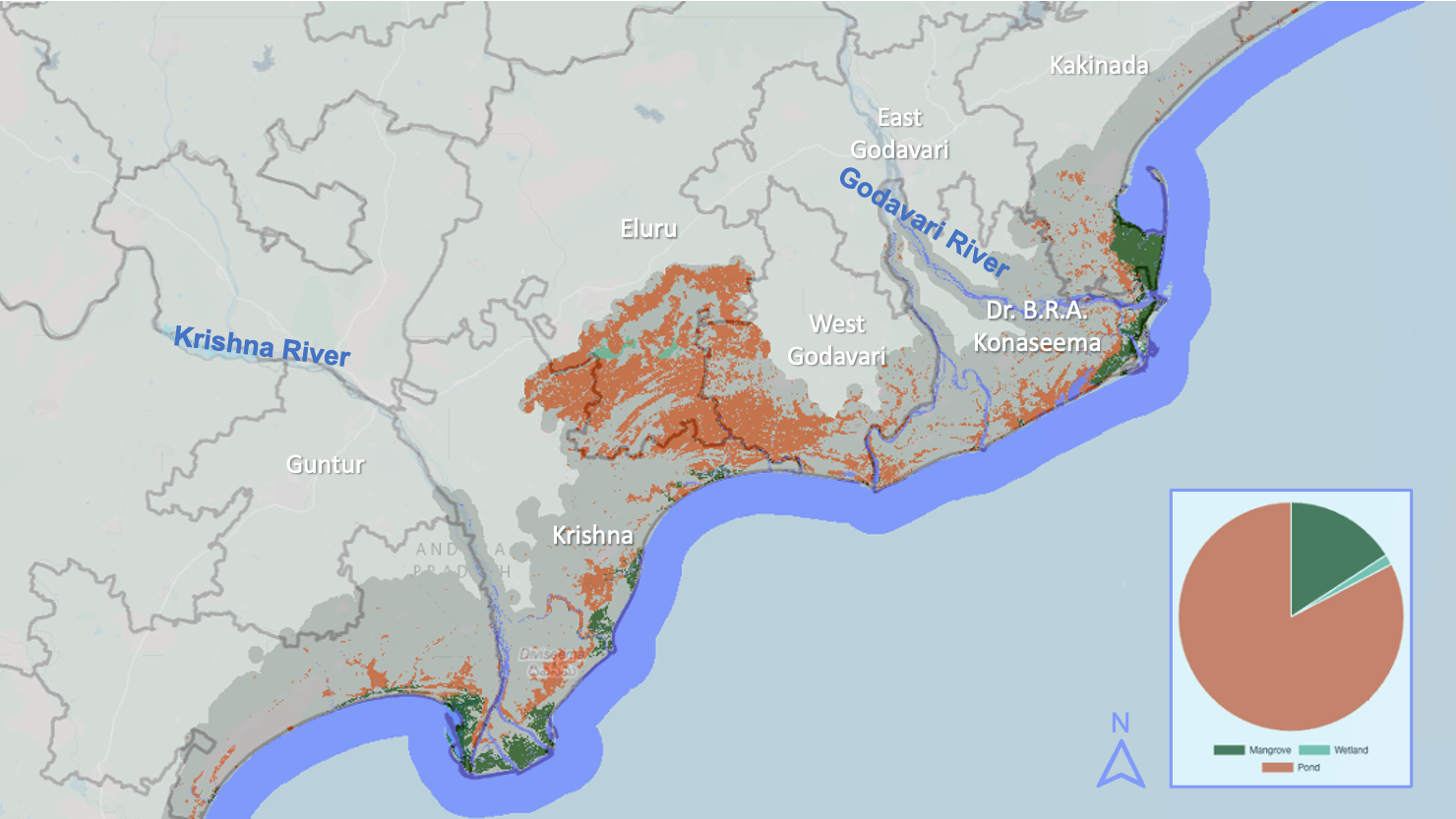
India has grown into one of the world’s largest shrimp producers, generating over $5 billion in value annually. The vast majority comes from Andhra Pradesh, India, where smallholder shrimp farmers make up more than 90 percent of farms, creating a highly fragmented and complex supply chain. Despite the industry’s rapid growth, farmers and communities face mounting challenges, including disease risks, extreme weather events, price instability, debt cycles, and rising production costs.
Traditional sustainability tools such as audits, certifications, and improvement projects help improve practices at the farm or fishery level, but they weren’t designed to tackle the systemic challenges that shape entire production landscapes and seascapes, such as those that stem from shared water resources, infrastructure and governance gaps, inconsistent labor conditions, lack of climate resiliency, and fragmentation and complexity of the supply chain.
The Krishna-Godavari Delta PBI is built to do exactly that. By bringing together the full range of stakeholders across the region—farmers, communities, supply chain actors, government, and civil society—it sets shared goals, coordinates action, and drives improvements at the landscape scale.
Stronger Farmers, Stronger Supply Chains
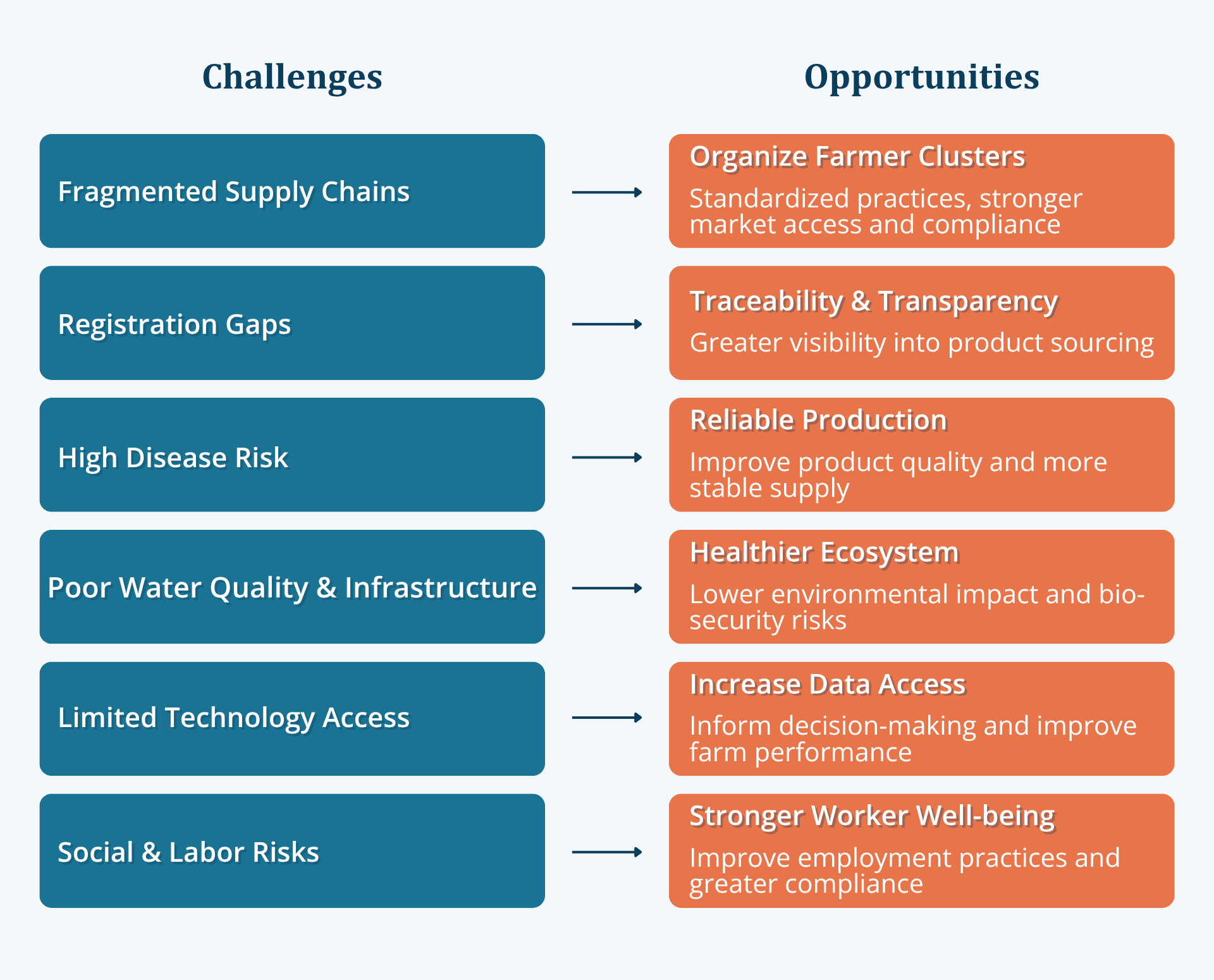
As farmers solve for their greatest challenges, a stronger foundation within sourcing communities will lead to less risk and greater stability for the Indian shrimp supply chain:
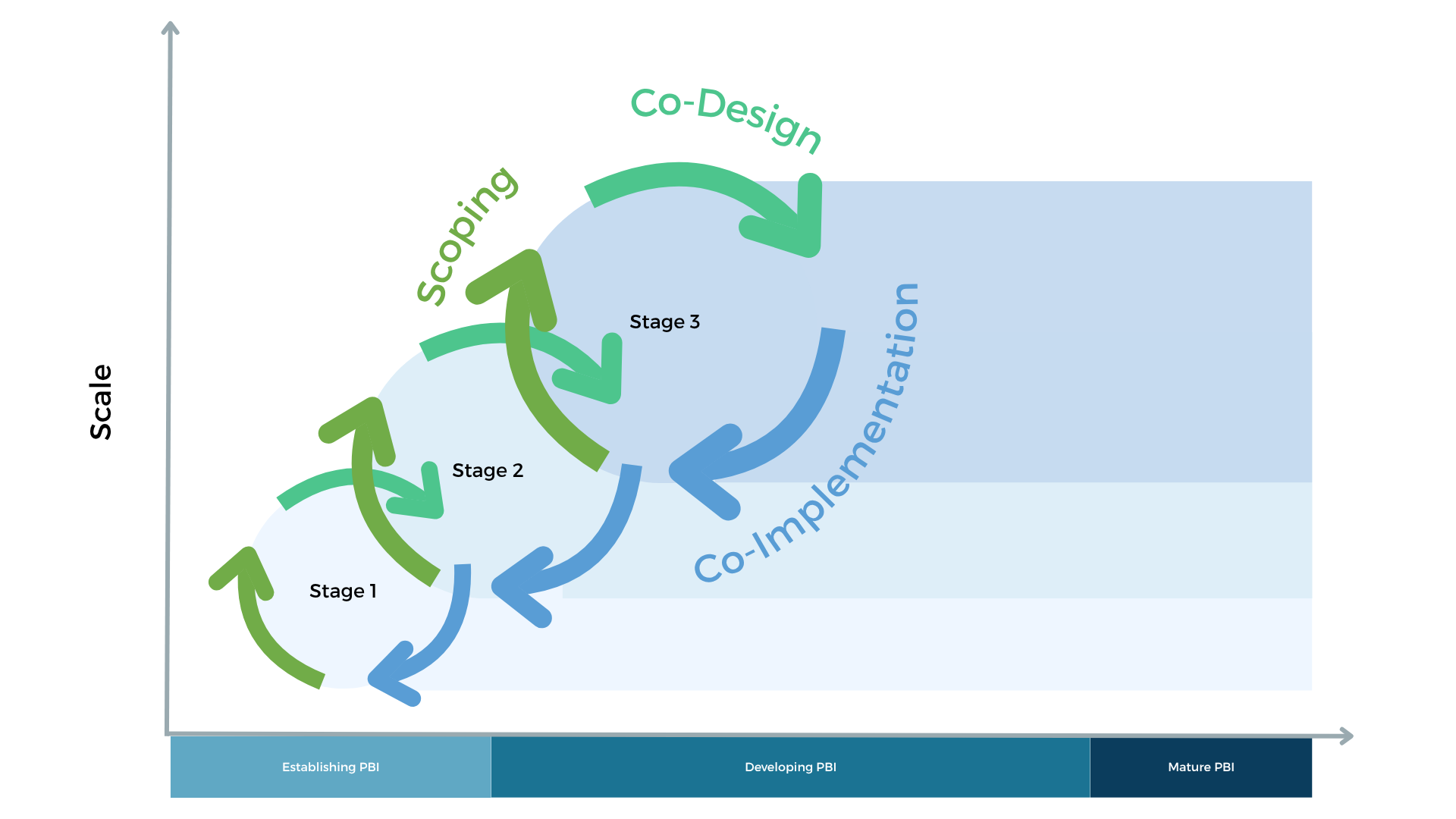
The PBI follows an iterative model of scoping, co-design, and co-implementation, expanding in scale and ambition as trust and capacity grow. Unlike top-down approaches, it starts by bringing together the full range of stakeholders across a production landscape to set shared goals, coordinate action, and drive improvement at a regional scale—addressing the environmental, social, and governance conditions that no single actor can change alone. The result is a plan that regional stakeholders actually own and are committed to implementing.
PROJECT MILESTONE
Developing a Community Action Plan
Our 18 months of groundwork covered the initial scoping and co-design phase for the Community Action Plan (CAP), building the trust, relationships, and governance infrastructure in the region as a strong foundation for implementation.
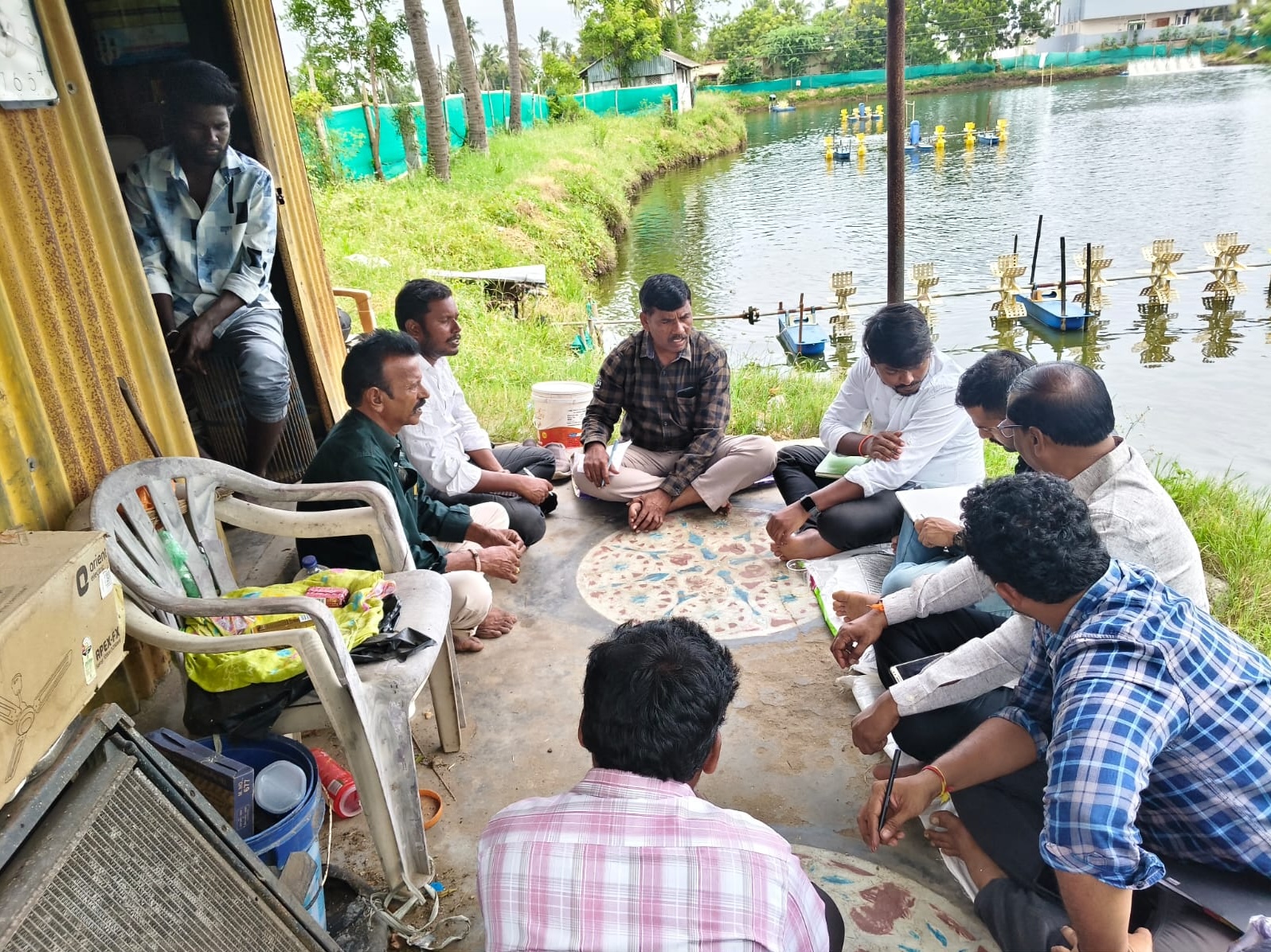
Stakeholder Mapping
Conducted extensive stakeholder mapping to understand the system, stakeholders, and existing initiatives. Indian Shrimp Aquascape was then created to connect people to available services and support, and share some of the insights from the mapping exercise.
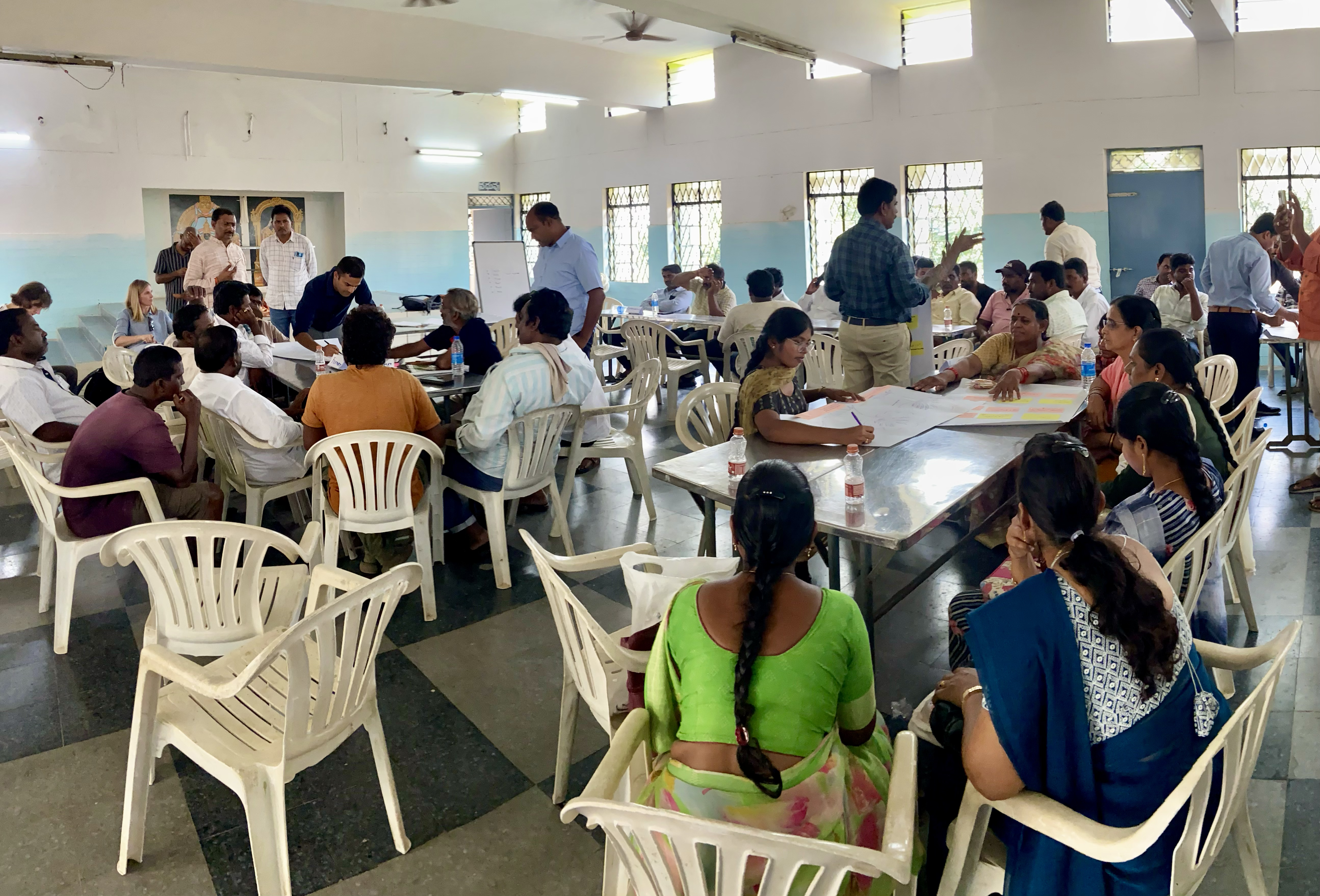
Community Public Forums
More than 200 farmers and community members from the six initial PBI mandals (Mandavalli, Kaikaluru, Veeravasaram, Sakhinetipalli, Malikipuram, and Razole) gathered to define what is driving instability on the ground, and identify priorities.
- Strengthening unity among farmers;
- Improving access to quality seed and feed, and;
- Improving disease management, as it relates to water quality and infrastructure.
Farmer unity was absent across all six mandals, emerging as one of the most significant barriers to collective action and system-wide change. Without organized farmer groups and strong social cohesion, it is impossible to implement shared water management, coordinate disease management, negotiate better input prices, or influence policy. Building social appetite and infrastructure for collective action is essential; farmer unity is the foundation for all other interventions.
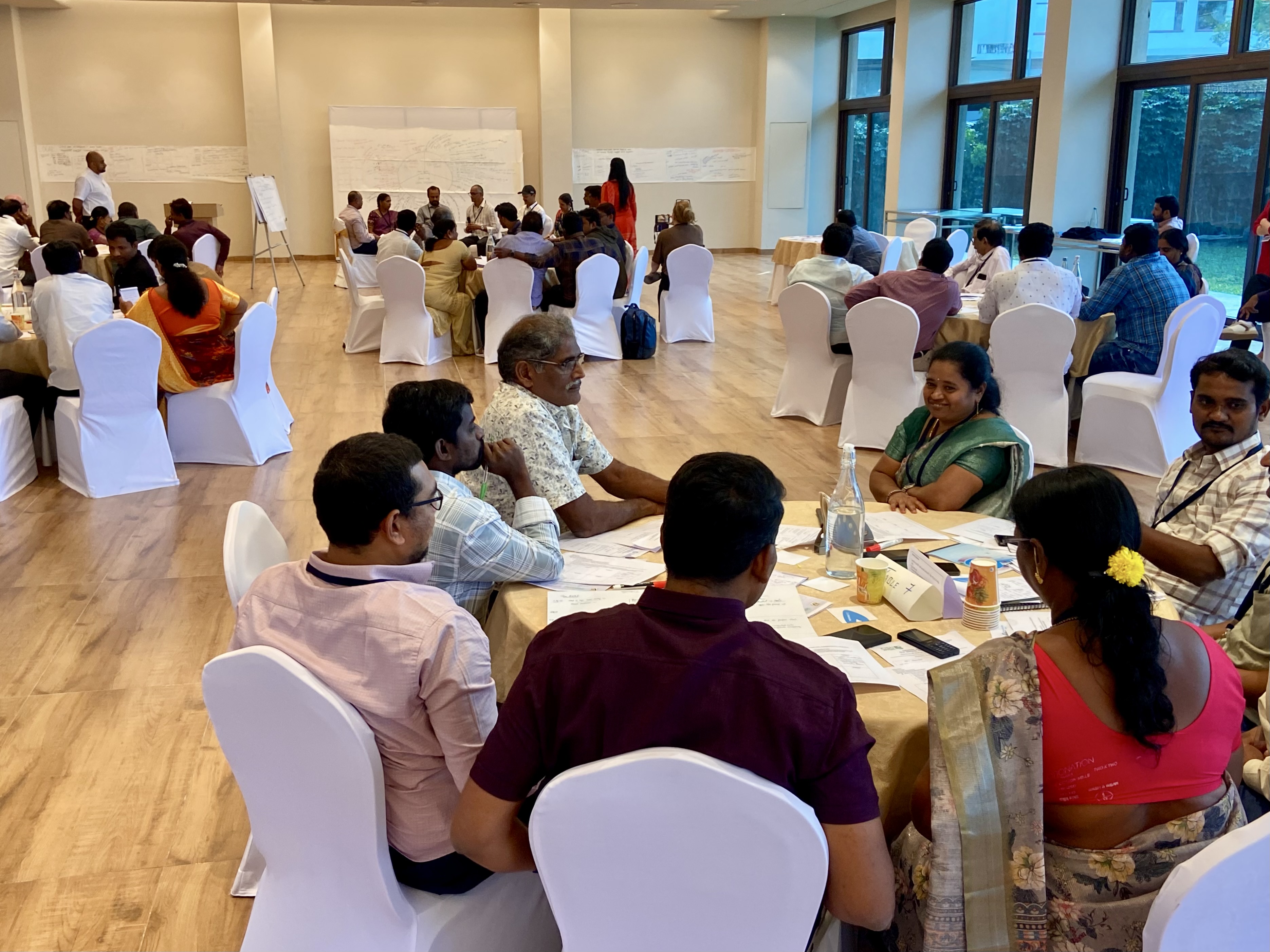
Co-design Workshop
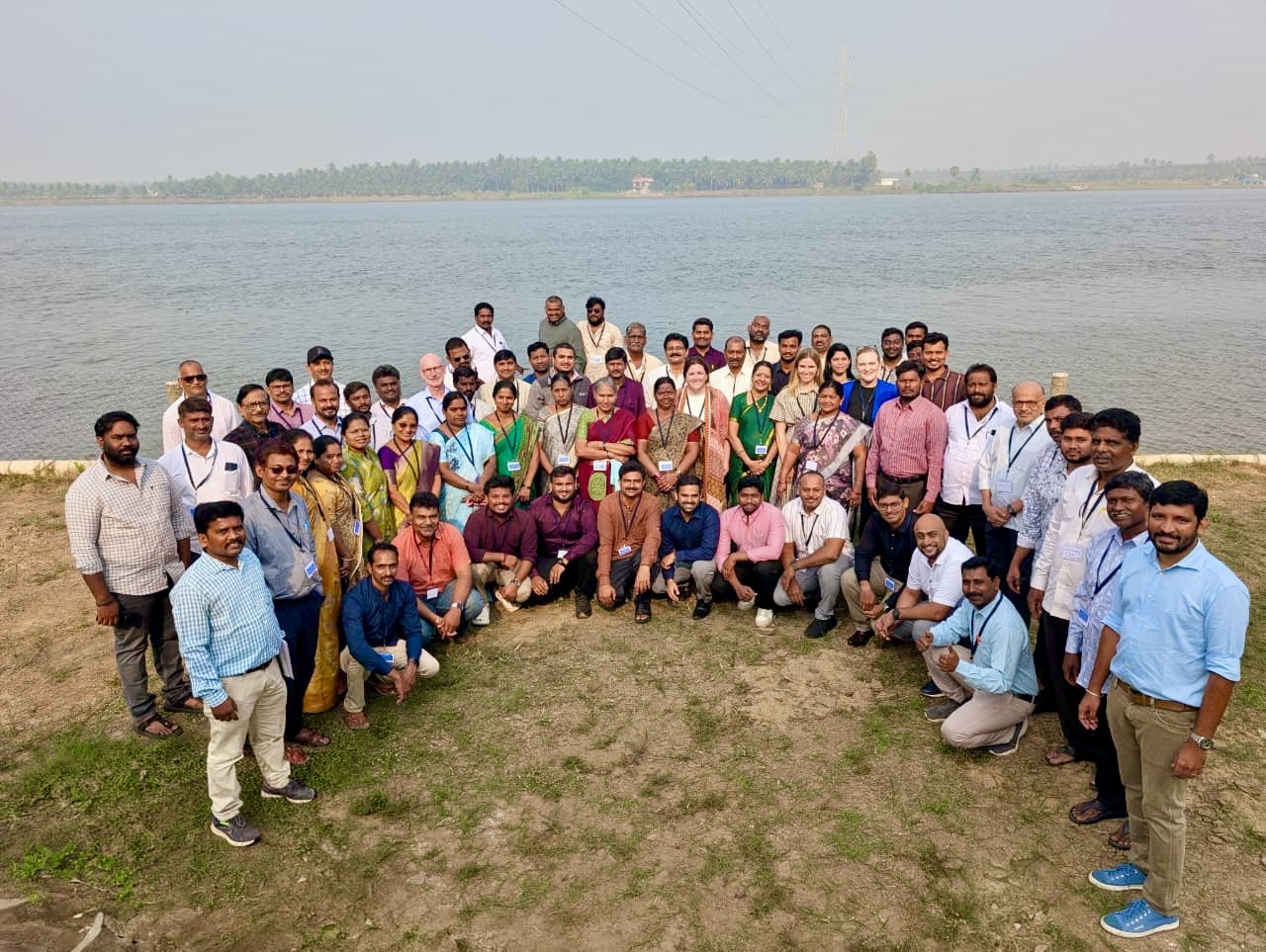
59 participants—farmers, processors, exporters, technicians, self-help group members, government representatives, and academics—met for 2.5 days to collaboratively identify practical pathways forward and areas where collective action could drive meaningful progress. Through this process, participants aligned around nine solution areas in response to the three priorities, and gathered 117 individual commitments.
- Strengthen Farm Management Practices
- Disease Prediction and Mitigation
- Farm Registration and Licensing
- Cluster Formation and FPOs
- Technology Innovation and Adoption
- Traceability for Operational Transparency
- Locally Adapted Broodstock
- Social Sustainability Awareness
- Effluent Treatment Plant + Canal Infrastructure
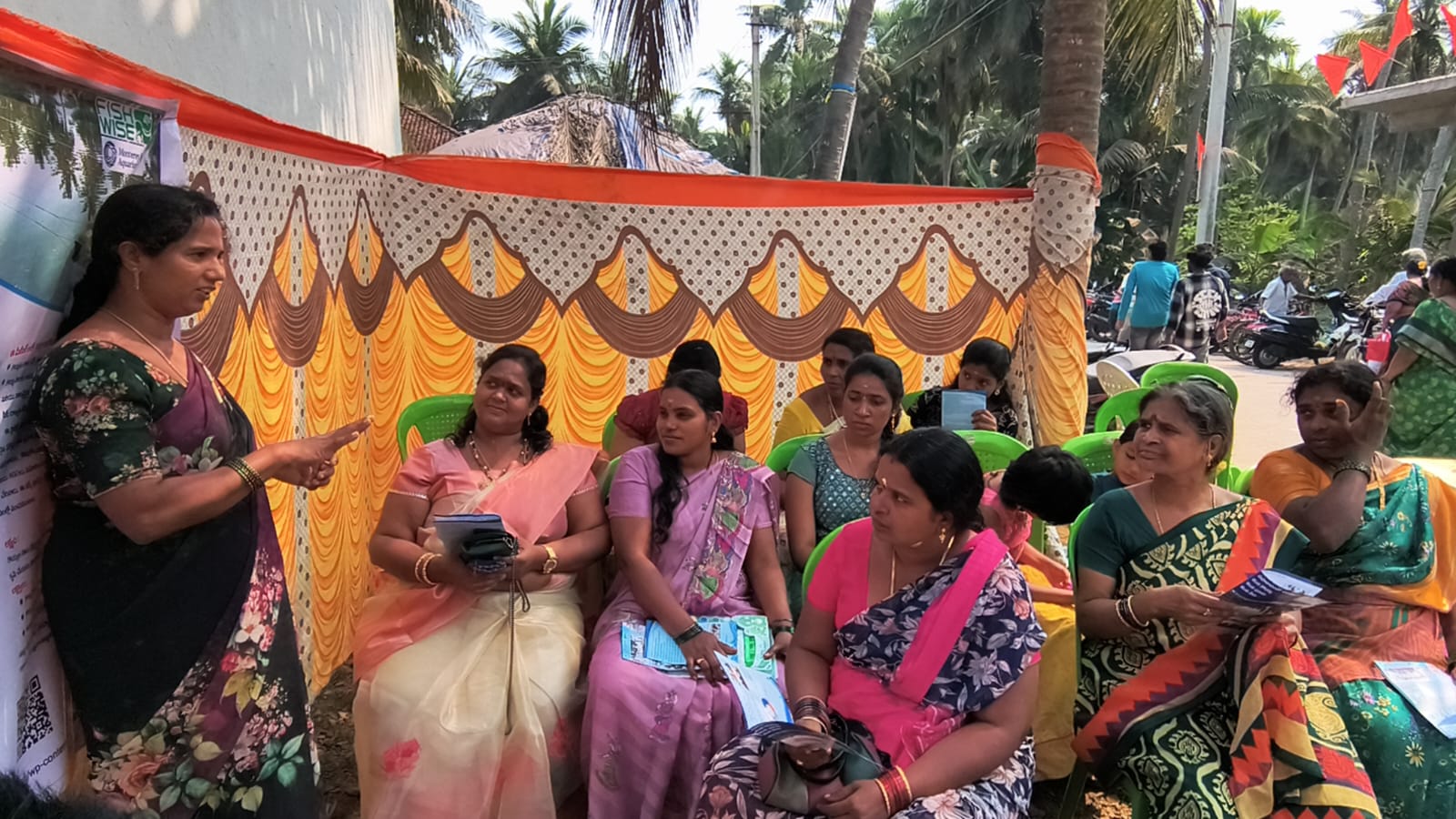
Validation Events
Once the solution areas were organized and translated into Telugu, the CAP was brought back to the communities to ensure that the plan clearly articulated their needs and commitments.
2026-2031 PLAN
Putting the Community Action Plan into Motion
The five-year community-validated CAP operationalizes the 117 commitments into a clear, measurable framework organized into six workstreams that align farmers, industry, and local governance. This is not a strategy document; this is an operational plan with built-in accountability backed by community members.
Get Involved
Creating a Bridge from Market to Sourcing Community
Interested supply chain actors and civil society organizations can enable and support solutions in the CAP through many avenues.
The path towards a “Mature PBI” is still coming into focus as the handful of PBIs in seafood sourcing regions continue to evolve and develop toward something durable and resilient. A mature PBI could open the door for shrimp coming from this region to be recognized by the market as sustainably and equitably produced. An overarching objective for this project is to bridge between market investment and support, and the realities for farmers on the ground in order to build a thriving supply chain. FishWise is facilitating the design of a market model that 1) defines practical avenues for companies to support outcomes within a sourcing region PBI, and 2) outlines a graduated path for practice improvements so small-scale producers can achieve market requirements, better access the market, and improve traceability. We are actively engaging improver programs and compliance schemes working in the region to inform this process. We are also very interested in hearing directly from brands and end-buyers to ensure market relevance. As CAP implementation progresses, buyers will have the unique opportunity to inform this broader market model creation.
Stay in Touch!
- Complete the Community Action Plan Engagement Survey or contact us at IndiaPBI@fishwise.org.
- Join our LinkedIn group: coming soon…