
In the modern seafood industry, “one step back” traceability is no longer sufficient to mitigate the complex risks found in global supply chains. Some of the most serious risks in seafood supply chains, from illegal fishing to forced labor, happen out at sea. That’s why more companies are shifting toward collecting vessel-level data and using it to assess and manage vessel-specific risk.
The development of FishWise’s Vessel Risk Dashboard (VRD) stemmed from a recognized “missing link” in seafood sustainability efforts. While many companies were making commitments and pledges toward responsible sourcing, they lacked the scalable vessel analytics needed to clearly illuminate potential risks within their source vessels or fisheries.
The VRD was designed as an interoperable, data-driven solution to increase transparency by aggregating data from multiple sources. This journey involved key collaborative milestones, including:
- The Supply Chain Risk (SCR) Project: A foundational effort to combat IUU fishing in seafood supply chains, supported by organizations like Standard’s Center for Ocean Solutions and the World Economic Forum.
- Integration with Global Fishing Watch (GFW): FishWise leverages GFW risk indicators and events, including AIS coverage and potential encounters.
Beyond ethical considerations, there are three primary drivers for companies to adopt vessel-level due diligence:
- Mitigation of High-Stakes Legal and Regulatory Risks: For U.S.-based companies, Customs and Border Protection (CBP) can issue Withhold Release Orders (WROs) against specific fishing vessels. If a product is transshipped from a blacklisted vessel, entire containers can be seized, even if direct suppliers appear “clean”.
- Financial and Operational Efficiency: Moving from static paperwork to digital, event-based data creates a cleaner, more auditable supply chain, leading to more resilient business operations.
- Brand Reputation and Consumer Trust: Public exposés and government actions have highlighted human rights abuses, such as debt bondage, on distant-water vessels. Proactively taking steps to assess and understand ‘vessel-level’ risk helps build trust with consumers.
Vessel-level due diligence is also strongly aligned with current and emerging regulatory requirements:
- SIMP: Supports documenting harvest-level and chain-of-custody data required by importers to demonstrate legal harvest.
- FSMA 204: While focused on food safety, FSMA’s requirement for critical tracking events (CTEs) and key data elements (KDEs) complements the infrastructure needed for robust vessel-level traceability.
Implementing vessel-level due diligence with the VRD is a structured process that moves beyond “checking a box” for external reporting toward informed decision making. We can break this process into six steps:
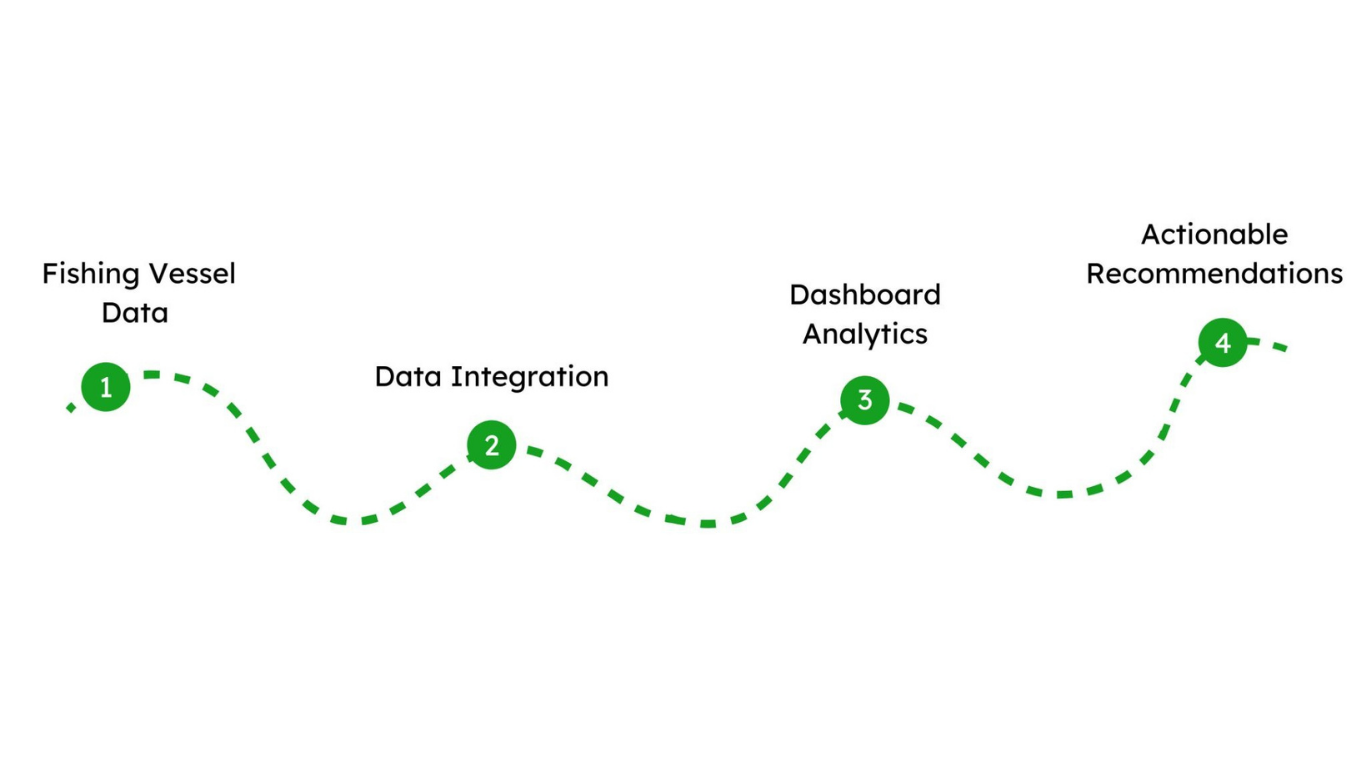
- Purposeful Data Collection: Implementation begins by establishing the “why, what, and how” of data collection. We work with companies to collect relevant fishing vessel information (e.g., unique vessel identifiers), relevant MSC certifications or FIP information, and fishing methods. Depending on a company’s data infrastructure, this information can be linked to priority products and associated timeframes.
- Data Integration: FishWise collates data and, through APIs, integrates multiple data sources (e.g., GFW, PVR, VOSI, PSMA) into our VRD.
- Dashboard Analytics: In addition to GFW risk indicators, FishWise triangulates collected data with external sources and vessel registries to help identify and prioritize risks.
- Strategic Action: The goal of the VRD is to use the data strategically. By understanding vessel-level risks, companies can identify which suppliers require further engagement or where collaborative advocacy is needed.
In today’s market, increasing transparency is both strategic and operational. As Renee Perry of Oddisea SuperFrozen notes, vessel-level data gives companies “early visibility into risk before it becomes a customer issue, a compliance issue, or a reputational issue”. We are excited to work with companies to increase supply chain transparency and adopt a due diligence approach to assessing and managing supply chain risks.
If you’re interested in learning more about our VRD or requesting a demo, please contact FishWise: info@fishwise.org.