
• Skip to primary navigation
  • Skip to main content

Fishwise.

Search Toggle
  • About
    • Mission & Vision
    • Staff & Board
    • Careers
    • Subscribe
  • Services
  • Expertise
  • Impact
    • Impact Report 2025
    • Previous Impact Reports
  • Resources
    • Resource Library
    • SALT
    • RISE
    • Indian Shrimp Aquascape
  • News
  • Contact Us
    • Donate

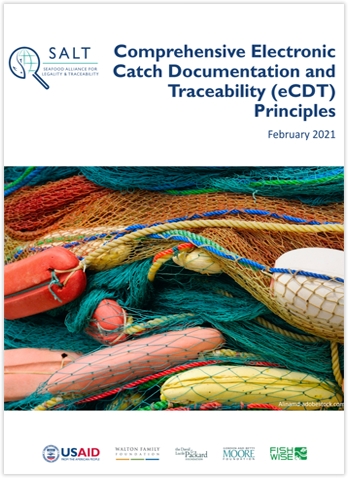
Comprehensive Traceability Principles
  • Principles
    • Data-informed decisions
    • Electronic, interoperable, and secure
    • Inclusive and collaborative
    • Lasting and scalable
    • Maximized benefits
    • Verification and data needs
  • About the Principles
  • Apply Them
  • Resources
  • Case Studies
icon for Create a program that is electronic, interoperable, and data secure}

Create a program that is electronic, interoperable, and data secure

Increase alignment across the seafood sector by prioritizing the seamless exchange of digital data with existing traceability systems. Choose technologies that meet needs for data analysis, security, and worker confidentiality.
Full description
Identify eCDT technologies that efficiently and effectively share data to fulfill data collection, analysis, and security needs. Prioritize interoperability with existing traceability systems and data formats.

APPLY THE PRINCIPLE

There are three main phases to building an electronic catch documentation and traceability (eCDT) program:

INITIATE – includes early research, goal setting, and stakeholder engagement;
DESIGN – includes identifying technology, assigning responsibilities, and creating the systems to support the program;
IMPLEMENT – includes piloting the program, adaptively managing, and scaling it.

Here you can see how this principle manifests throughout each phase.

  • Initiate
  • Design
  • Implement
  • Facilitate interoperability (when technology systems are able to exchange information or data seamlessly) by identifying labor and product data requirements already in place in key markets and across relevant agencies (e.g., import rules, food safety)

Relevant Guidance

  • SALT Feature

Overcoming Barriers: Speaking a Common Language Through Interoperability

Seafood Alliance for Legality and Traceability (SALT)
2020
SALT has distilled lessons from existing traceability pilots to provide potential solutions to overcoming the challenges a company might face when adopting eCDT. This is the 3rd in the “Overcoming Barriers” series and outlines solutions to the challenge of interoperability and seamless data exchange across the supply chain.
  • Report

Compliance of Imports of Fishery and Aquaculture Products with EU Legislation

European Parliament Directorate-General for Internal Policies
2013
The study estimates the compliance of fisheries and aquaculture products imported into the EU with the current quality safety EU legislation, and with the regulation on IUU fishing. It investigates to what extent the FAP reaching the EU market comply with these sanitary and IUU regulations.
  • Report

Towards Interoperable Fisheries Data Systems in the U.S.

MRAG Americas
2017
The range of fisheries data users globally has increased, so the ability for these systems to communicate and transfer data seamlessly proves to be of importance, as it aids the development of policies and management plans. To meet this need, this report compiles stakeholder interviews and literature reviews to inform how the U.S. can modernize… Read More about Create a program that is electronic, interoperable, and data secure
Find More Relevant Resources
  • Seek to minimize costs of compliance
    • Require only the minimum technology adoption and data collection needed to meet eCDT program objectives. Identify technology that adds value to businesses’ bottom line; ensure there is a built-in cost-recovery scheme
  • Avoid creating trade barriers
    • Ensure that the program is compatible with the traceability requirements of major importers (e.g., SIMP, European Union)
  • Identify eCDT technologies to fulfill data collection and analysis needs
    • Let data collection, program objectives and user need drive eCDT tool selection
  • Develop eCDT programs and technologies with “human-centered design” approaches
    • Consult with technology users before and during implementation. Use site-specific approaches or designs where possible, but customization should still support interoperability
  • Prioritize interoperability with existing traceability programs and data 
    • Use standardized data formats (i.e., Key Data Elements (KDEs)). Consider alignment with industry data standards (e.g., GDST Version 1.0) and import data requirements of market states (e.g., U.S. SIMP)
  • Ensure data security protocols

Relevant Guidance

  • Guidance Document

GDST 1.1 Materials

Global Dialogue on Seafood Traceability
2022
The GDST is a business-to-business platform that has created the foundation for a unified framework for interoperable seafood traceability practices. GDST 1.1 materials here include core normative standards, a spreadsheet of their basic universal list of KDEs, explanatory materials, and technical implementation guidance.
  • Report

Advisory Notes for the EU Supply Chain on how to avoid IUU fishery products

Environmental Justice Foundation
2017
These reports outlines approaches to prevent IUU fishery products from entering EU supply chains, specific to the United Kingdom, France, and Germany. It offers expert advice on risk assessment and risk mitigation, and encourages action to prevent IUU fishery products entering EU supply chains, which is costly on a number of levels. Multiple Languages Available.… Read More about Create a program that is electronic, interoperable, and data secure
  • Website

Digital Principles: Design with the User

Digital Impact Alliance (DIAL)
Successful digital initiatives are rooted in an understanding of user characteristics, needs and challenges. User-centered design starts with getting to know the people you are designing for through conversation, observation and co-creation. This page highlights tips and tools to do so.
Find More Relevant Resources
  • Pilot test the technology with key users
    • Identify and address barriers and challenges to technology adoption
  • Ensure data security is maintained

Relevant Guidance

  • Case Study

Technology Solutions for Electronic Catch Documentation and Traceability (eCDT)

USAID Oceans & Fisheries Partnership (USAID Oceans)
2019
Learn about USAID Oceans-developed and supported technology tools for eCDT. Oceans has worked closely with government, industry, and tech partners to design and develop tools to establish connectivity in remote and at-sea areas, provide a mechanism for data collection and transmission throughout the supply chain, and provide benefits, such as communication, safety, and business tools.
  • Peer Reviewed Article

Tools and Technologies for the Monitoring, Control and Surveillance of Unwanted Catches

James et al.
2019
This paper first provides an overall synthesis of the pro’s and con’s of several monitoring tools and technologies. Four electronic monitoring (EM) technologies already trialled in EU fisheries are then summarized.
  • Guidance Document

Data Protection, Privacy and Security for Humanitarian & Development Programs

World Vision International
2017
Digital technology has been used in humanitarian and development programs to improve the quality of ethical standards worldwide. Here, World Vision International discusses their framework to ensure privacy, security and confidentiality are met during data collection as well as challenges faced when considering the complexities individuals face and their ability to collaborate.
Find More Relevant Resources

Are you interested in putting these Principles into practice?

See How
quote bubble icon.
Interested in Applying the Principles or Have a Question?
document icon.
Suggest a Traceability Resource

Join the conversation with #TraceabilityPrinciples

@SALTTRACE

Footer Logo

831.427.1707
info@fishwise.org
P.O. Box 233, Santa Cruz, CA 95061-0233 USA

  • Contact
  • Subscribe to our Newsletter
  • Donate
  • Facebook
  • Twitter
  • Linkedin
  • Instagram

© 2026 FISHWISE All Rights Reserved