
• Skip to primary navigation
  • Skip to main content

Fishwise.

Search Toggle
  • About
    • Mission & Vision
    • Staff & Board
    • Careers
    • Subscribe
  • Services
  • Expertise
  • Impact
    • Impact Report 2025
    • Previous Impact Reports
  • Resources
    • Resource Library
    • SALT
    • RISE
    • Indian Shrimp Aquascape
  • News
  • Contact Us
    • Donate

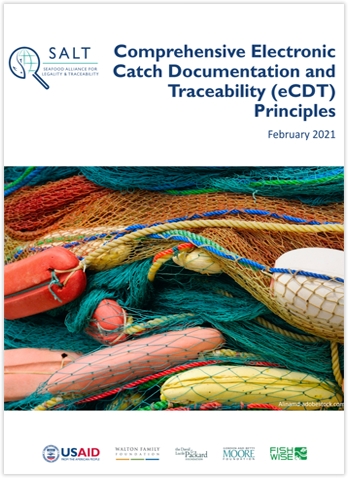
Comprehensive Traceability Principles
  • Principles
    • Data-informed decisions
    • Electronic, interoperable, and secure
    • Inclusive and collaborative
    • Lasting and scalable
    • Maximized benefits
    • Verification and data needs
  • About the Principles
  • Apply Them
  • Resources
  • Case Studies
icon for Build a lasting and scalable program}

Build a lasting and scalable program

Generate and maintain support for the eCDT program—politically, financially, and with users—so it can expand beyond the pilot phase.
Full description
Plan for expansion from the start, informed by eCDT program pilots, transparent sharing of progress, and user feedback. Encourage the adoption of these Principles into policy, create a plan for long-term funding, and leverage political and industry champions.

APPLY THE PRINCIPLE

There are three main phases to building an electronic catch documentation and traceability (eCDT) program:

INITIATE – includes early research, goal setting, and stakeholder engagement;
DESIGN – includes identifying technology, assigning responsibilities, and creating the systems to support the program;
IMPLEMENT – includes piloting the program, adaptively managing, and scaling it.

Here you can see how this principle manifests throughout each phase.

  • Initiate
  • Design
  • Implement
  • Identify potential challenges to longevity of the program early on
    • Consider: Is the budget for the program secure? Where is political support strongest and weakest?

Relevant Guidance

  • Tool / Toolkit

Checklist for Governments: Lasting and Scalable Seafood Traceability

IFT Global Food Traceability Center, SALT
2022
This checklist supports governments in designing and implementing lasting and scalable traceability systems in their seafood sectors. It compiles insights and advice gleaned from traceability experts and published resources and case studies. After reviewing findings for common themes and factors that influenced or interfered with traceability, this checklist was created for governments to consider, use,… Read More about Build a lasting and scalable program
  • Guidance Document

Nine Steps for Developing a Scaling-up Strategy

World Health Organization, ExpandNet
2010
Scaling-up increases the impact of successful innovations, improving the operation and reach of programs, and should be conducted via a systematic approach to expand upon previously successful pilot projects. The nine steps are guidelines which can be adapted to each situation and use data collected from monitoring and evaluation to further decision making and scaling-up.
  • Guidance Document

Scaling Up: From Vision to Large-Scale Change

Management Systems International
2016
This document provides effective strategies and pathways to help the process of scaling-up, assessing the pros and cons of varying methods and focuses on it’s design and implementation in projects. Using well devised scaling-up methods, the productivity and vision of traceability projects can be enhanced, strengthening organizations by aligning goals and sharing resources.
Find More Relevant Resources
  • Encourage the adoption of these principles into policy
    • Encourage policy adoption/development to strengthen eCDT support at the governmental level
  • Estimate funding needs and responsibilities to fund the program sustainably
    • Develop plan for long-term funding to support all steps of program implementation
  • Identify potential pilot sites
    • Select supply chains that are well-understood and sites that have on the ground (industry and NGO) support

Relevant Guidance

  • Guidance Document

Good Practice Guidelines (GPG) on National Seafood Traceability Systems

Food and Agriculture Organization of the United Nations
2018
To combat IUU fishing, Members of the FAO Committee on Fisheries created guidelines for national fishery authorities. The guidelines address the purpose and principles of flag state responsibilities, and the necessary cooperation between states. They are a valuable tool to strengthen the compliance of flag states, regarding their flagging and control of fishing vessels.
  • Case Study

Learning Site Profile: General Santos, Philippines

USAID
This Site Profile provides an overview of why it was selected as one of USAID’s pilot sites, including the site’s regional significance, biodiversity, and key economic and fisheries data. Priority challenges and opportunities are also presented in this brief overview.
  • Infographic

Understanding Costs for Traceability Technology Implementation

Future of Fish
This infographic highlights the phases of different costs accrued for a traceability system: scoping, installation, implementation, maintenance. It describes some of the main costs for each phase.
Find More Relevant Resources
  • Pilot test the eCDT program 
    • Formalize partnership with the users and supporters who will be the first implementers of the technology. Implement a mechanism to receive feedback from the first implementers
  • Outline scope and objective for scaling
  • Identify differences between the pilot and other areas for implementation 
    • Assess objectives and resources for scaling: are the funds, staff, infrastructure, and resource commitments still present and appropriate for the scope?

Relevant Guidance

  • Case Study

Abalobi: case study by UNESCO-Pearson Initiative for Literacy

UNESCO
2018
This case study involves Abalobi, a suite of mobile apps co-designed by South African stakeholders to be an information management system for small-scale fisheries, as part of a series highlighting how inclusive digital solutions can help people with low skills or low literacy levels use technology in ways that support skills development and improve livelihoods.
  • Report

Digital Investment Tool

USAID
2019
The Digital Investment Tool is designed to ensure that staff considers best practices, based on the Principles for Digital Development, when developing digital systems. Section 8 specifically has information for scaling a digital system.
  • Tool / Toolkit

Checklist for Governments: Lasting and Scalable Seafood Traceability

IFT Global Food Traceability Center, SALT
2022
This checklist supports governments in designing and implementing lasting and scalable traceability systems in their seafood sectors. It compiles insights and advice gleaned from traceability experts and published resources and case studies. After reviewing findings for common themes and factors that influenced or interfered with traceability, this checklist was created for governments to consider, use,… Read More about Build a lasting and scalable program
Find More Relevant Resources

Are you interested in putting these Principles into practice?

See How
quote bubble icon.
Interested in Applying the Principles or Have a Question?
document icon.
Suggest a Traceability Resource

Join the conversation with #TraceabilityPrinciples

@SALTTRACE

Footer Logo

831.427.1707
info@fishwise.org
P.O. Box 233, Santa Cruz, CA 95061-0233 USA

  • Contact
  • Subscribe to our Newsletter
  • Donate
  • Facebook
  • Twitter
  • Linkedin
  • Instagram

© 2026 FISHWISE All Rights Reserved